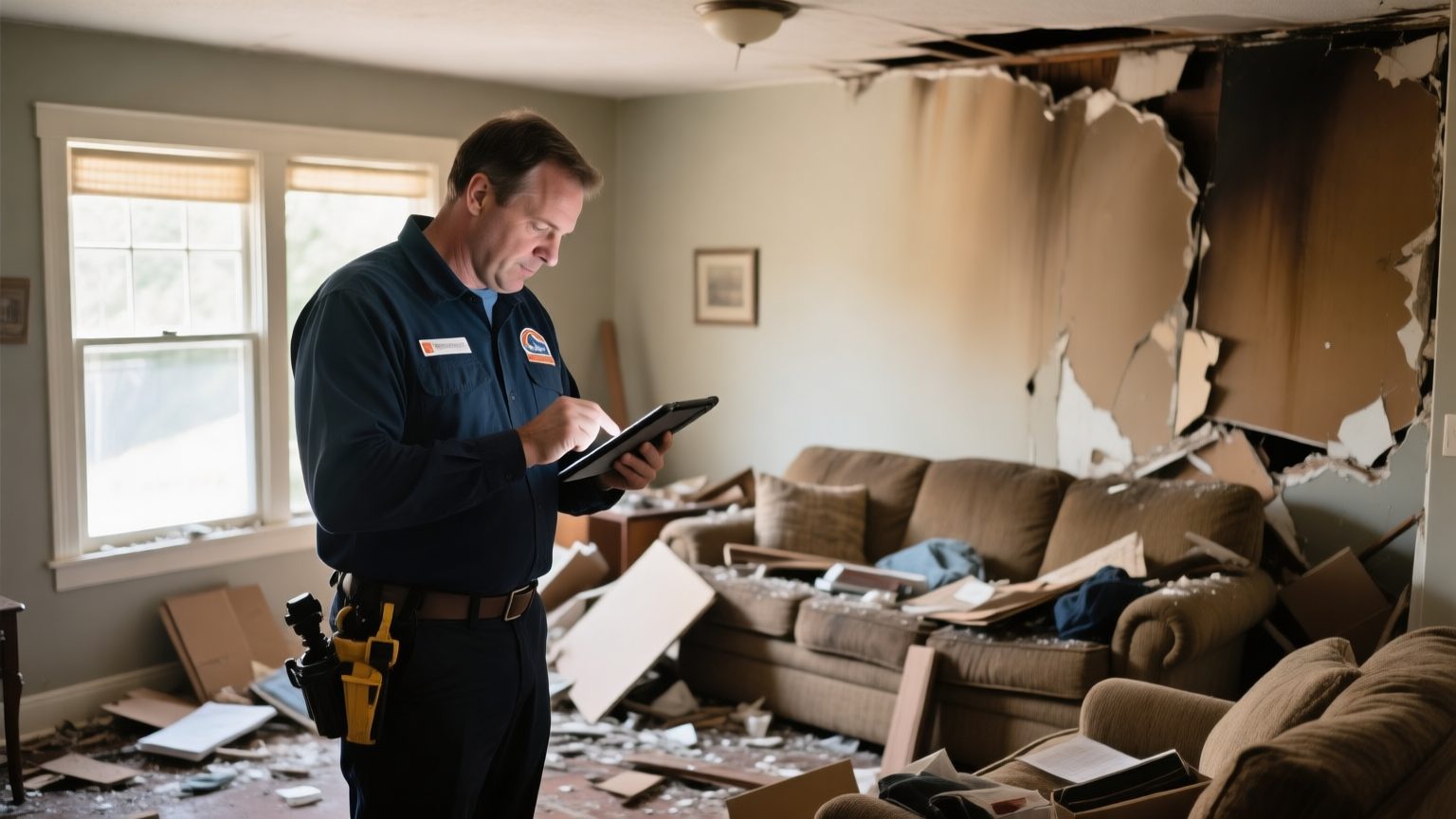
What contents documentation actually involves
On a contents-heavy claim, the dwelling is the easy part. The hard part is the personal property: hundreds or thousands of individual items, each of which needs an identification, a quantity, an age and condition note, a replacement cost value, and a source behind that value. A public adjuster is not just listing what was lost. They are building a record a carrier can review and accept, item by item.
That record has three jobs. It has to be complete, so nothing recoverable is left off. It has to be accurate on value, which means the right replacement cost value for each item at today's prices. And it has to be defensible, meaning every number carries the evidence that supports it. Miss any one of the three and the claim slows down in back-and-forth over line items.
Why the manual process takes three to five days
Most public adjusters describe the same workflow, and the same bottleneck. You photograph items in the field, enter each one into a spreadsheet by hand, then look up prices one at a time on retailer websites, copying links and screenshots as you go. For a single contents-heavy claim that is often three to five days of desk work, and a high-volume adjuster running dozens of active claims at once simply cannot keep up.
The slow step is not the photography. It is the research: matching each item to a current product, pricing it, and recording where the price came from. That is repetitive, high-volume work, and it is exactly the kind of task where AI assistance changes the math without changing who is in control.
How AI-assisted valuation compresses the work
AI-assisted contents valuation takes the messy inputs a public adjuster already has, photos, item lists, spreadsheets, and PDFs, and drafts a described, priced, and sourced inventory from them. The adjuster then reviews the draft rather than building it from a blank sheet. The difference is measured in the ratio of time spent creating versus time spent checking.
| Step | Manual process | AI-assisted, professional review |
|---|---|---|
| Identify each item | Type a description by hand | Drafted from the photo, adjuster confirms |
| Find replacement cost | Search retailers one by one | Researched from retailer data, adjuster reviews |
| Attach evidence | Copy links and screenshots manually | Comparable listing and source attached automatically |
| Produce the file | Assemble the spreadsheet | Review-ready output, adjuster signs off |
The full four-step path from a folder of claim photos to sourced values is laid out in how to turn contents photos and claim files into review-ready RCVs. The point for a public adjuster is throughput: the same person can close more contents files in a week because the research is drafted instead of done by hand.
The evidence that makes a value hold up
A price on its own invites a question. A price with a matching product, a comparable listing, and a clear item description invites acceptance. The evidence is what turns a number into something a carrier can review without a fight over where it came from.
Two things make an item value hold up under review. First, the replacement has to be like kind and quality: a comparable item, not a nicer one and not a cheaper one. Second, the source has to travel with the value, so the person reviewing can see the retailer and the listing behind the price. Keeping that evidence attached to every line is the core of defensible replacement cost documentation, and it is the difference between a file that clears review and one that stalls. Because ACV and recoverable depreciation are calculated from the RCV, getting the replacement cost and its evidence right up front is what keeps the rest of the math clean, as covered in RCV vs ACV on a contents claim.
What AI does not do, and should not
AI-assisted valuation drafts and researches. It does not decide the claim, and it is not a substitute for the public adjuster's judgment or license. Every value is a draft until the adjuster reviews and approves it, which is the point of a professional review workflow: the AI does the volume, the professional owns the outcome. ContentsIQ is not a public adjuster, it does not negotiate with carriers, and it never promises a higher payout. What governs how and when a replacement cost is paid is the policy language, not any tool.
It also complements the software a public adjuster already uses rather than replacing it. Contents valuation and evidence sit alongside estimating platforms like Xactimate, feeding a clean, sourced contents file into the workflow the adjuster already runs. For guidance on the profession itself, the National Association of Public Insurance Adjusters is the standard reference.
How ContentsIQ fits a public adjuster's workflow
ContentsIQ turns a public adjuster's photos and claim files into review-ready item descriptions, replacement cost values, and supporting evidence, then routes everything through a review queue where the adjuster approves each line. It is built for the messy, high-volume claims where manual research is the bottleneck, including fire and smoke losses where a room-by-room record matters; the approach for those is in how to document contents after a fire. Claim files stay protected under the platform's security practices, and you can see more contents-claim guides on the ContentsIQ blog. To see it on your own claims, talk to ContentsIQ.