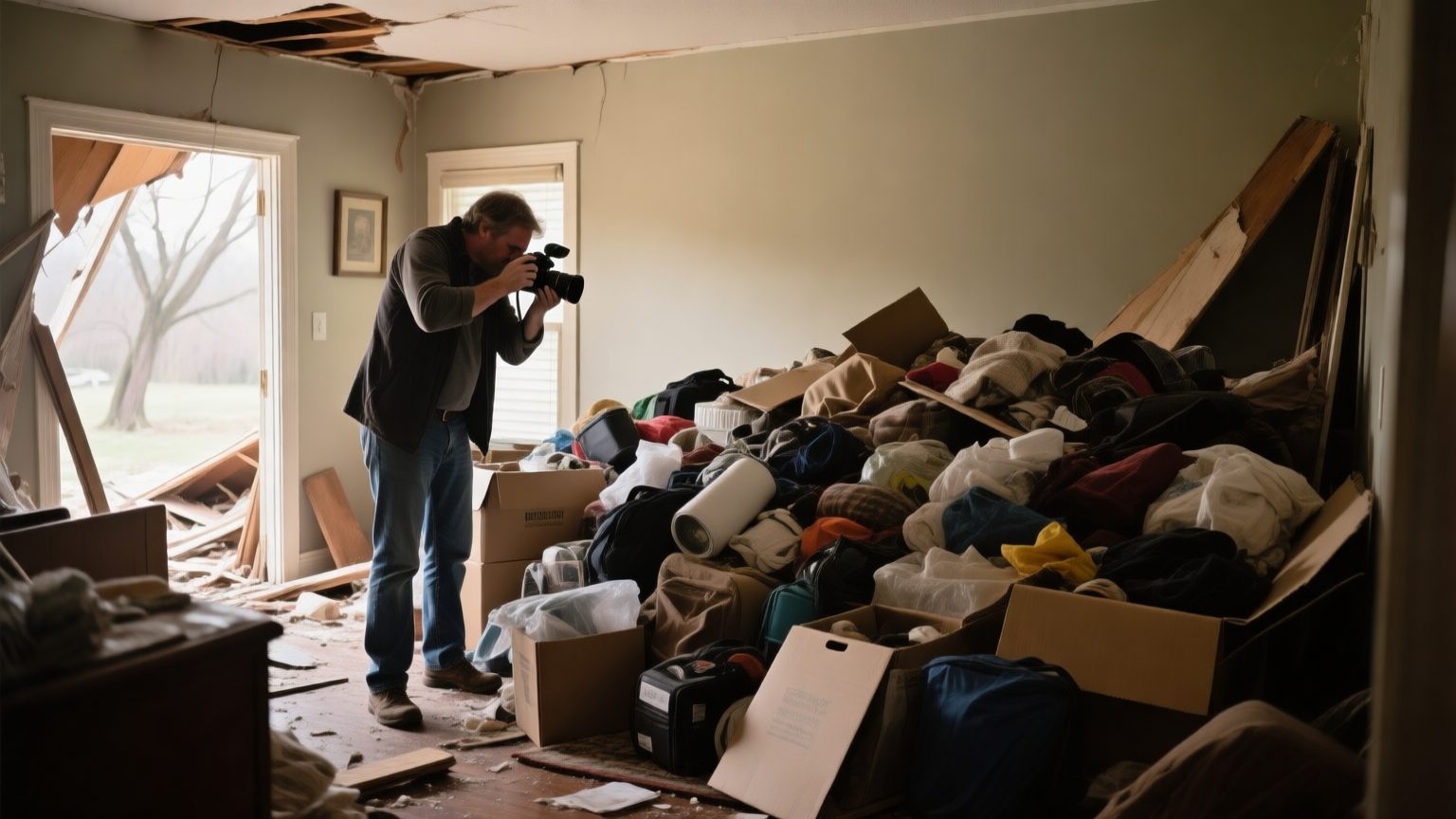
After a catastrophe, the contents backlog forms fast. Within seventy-two hours a firm can be sitting on a volume of claims that did not exist on Monday, and each large loss can carry a 2,000-item inventory that takes days to build by hand. The math is unforgiving: if building one inventory takes three to five days of manual work, a wave of concurrent large losses overwhelms any team sized for normal volume. The instinct is to hire more hands, but the real constraint is usually not headcount. It is the manual transcription step sitting in the middle of every item.
This is how to process high-volume contents inventories after a CAT event without the backlog: understand where the bottleneck actually is, restructure the work as a pipeline, and remove the transcription step that consumes the hours. The goal is to clear thousands of items with a defensible value and evidence on each, at the speed the surge demands.
Why the backlog forms: transcription, not headcount
Building a contents inventory by hand is mostly transcription. A specialist reads a photo or a field note, identifies the item, types a description, searches for a current price, records the source, and notes condition, per item, thousands of times. That per-item keying is the single largest cost in a large-loss inventory, and it is what turns a 2,000-item claim into days of work. When a catastrophe produces many such claims at once, the transcription load multiplies and the backlog appears, regardless of how many people are on the desk, because each person is still doing the same slow per-item work.
Catastrophe volume is a known stressor on the whole claims system, as the Insurance Information Institute's overview of catastrophe insurance issues describes, and contents is where the item counts are highest. Seeing the bottleneck clearly matters because the fix follows from it: if transcription is the constraint, adding people who each still transcribe by hand scales the cost linearly and never breaks the backlog. Removing the transcription step is what changes the slope.
Restructure the work as a pipeline, not per-item
The first move is structural. Doing each item end to end, identify, price, source, review, one at a time, means a specialist context-switches constantly and nothing parallelizes. Instead, separate the work into stages and run the inventory through them as a pipeline: bulk identification and drafting first, then valuation with evidence, then professional review. Each stage does one kind of work across many items, which is faster per item and lets different capacity handle different stages.
| Stage | What happens | Why it scales |
|---|---|---|
| Bulk drafting | Item descriptions generated from photos and claim files | Removes per-item hand-keying, the main bottleneck |
| Valuation with evidence | Replacement cost values researched from retailer data, source attached | Pricing and sourcing done systematically, not searched item by item |
| Professional review | A person confirms and corrects drafted values in a queue | Human effort focused on judgment, not transcription |
The pipeline matters because it concentrates human time where it adds the most value, review and judgment, and takes it off the mechanical work. A reviewer approving drafted values in a queue clears far more items per hour than a specialist building each line from scratch. Realistic expectations for how long a large-loss inventory should take, and where the time actually goes, are worked through in how long building a contents inventory should take on a large-loss claim.
Remove the transcription step with AI drafting
The stage that breaks the backlog is the first one. When item descriptions and replacement cost values are drafted from photos and claim files automatically, the per-item keying that consumed the hours collapses, and the inventory that took days starts to take a fraction of that. This is where ContentsIQ is built for CAT volume: it identifies items, drafts descriptions, researches replacement cost values from real retailer data, attaches evidence, comparable listings and source context, and routes everything through a professional review queue. AI drafts the thousands of lines; professionals review them. It is strongest exactly on large, messy, high-volume claims, the total-loss fires, wildfire, hurricane, smoke, and water losses that produce 2,000-item inventories.
Cutting the time without cutting the defensibility is the whole trick, because speed that produces unsourced values just moves the backlog into review. The way to keep both is to have the evidence attached as the values are drafted, which is covered in how to cut contents inventory time from days to hours without losing defensibility. ContentsIQ is complementary to estimating platforms like Xactimate and to field and packout tools; it handles the valuation and documentation side at volume, not the estimating or packout operations, and it does not replace professional judgment or act as a public adjuster.
Keep every value defensible at speed
Volume is no excuse for a value a reviewer cannot verify, and at CAT scale that discipline has to be built into the pipeline rather than added later. Each line still needs specific identification, a replacement cost value sourced to a real retailer with a date, and the condition inputs behind depreciation. Replacement cost value is the new price; actual cash value is that value minus depreciation, and many policies pay ACV first and release recoverable depreciation once items are replaced and proof is submitted, all of which the policy language governs. Grounding a surge team in what replacement cost value (RCV) means keeps the drafted values meaningful, and a well-built home inventory of the kind the Insurance Information Institute describes in its guide to creating a home inventory is the standard the reconstruction aims at.
On total-loss events where the contents are gone, a fire being the clearest case, the inventory has to be reconstructed from pre-loss evidence before it can be valued, which is its own discipline covered in how to document contents after a fire. The pipeline is the same once the item list exists: bulk drafting, valuation with evidence, review.
Clearing the surge without falling behind
The teams that clear a catastrophe surge are not the ones that hired fastest; they are the ones that stopped hand-keying every line. Restructure the work into a pipeline, remove the transcription bottleneck with AI drafting, and keep evidence attached so review confirms rather than rebuilds. Done that way, one team can process thousands of items across many concurrent large-loss claims with a defensible value on every line, at the speed a CAT event demands. You can read more large-loss guidance on the ContentsIQ blog, see how your claim data is protected on the security page, or talk to ContentsIQ about handling catastrophe contents volume.