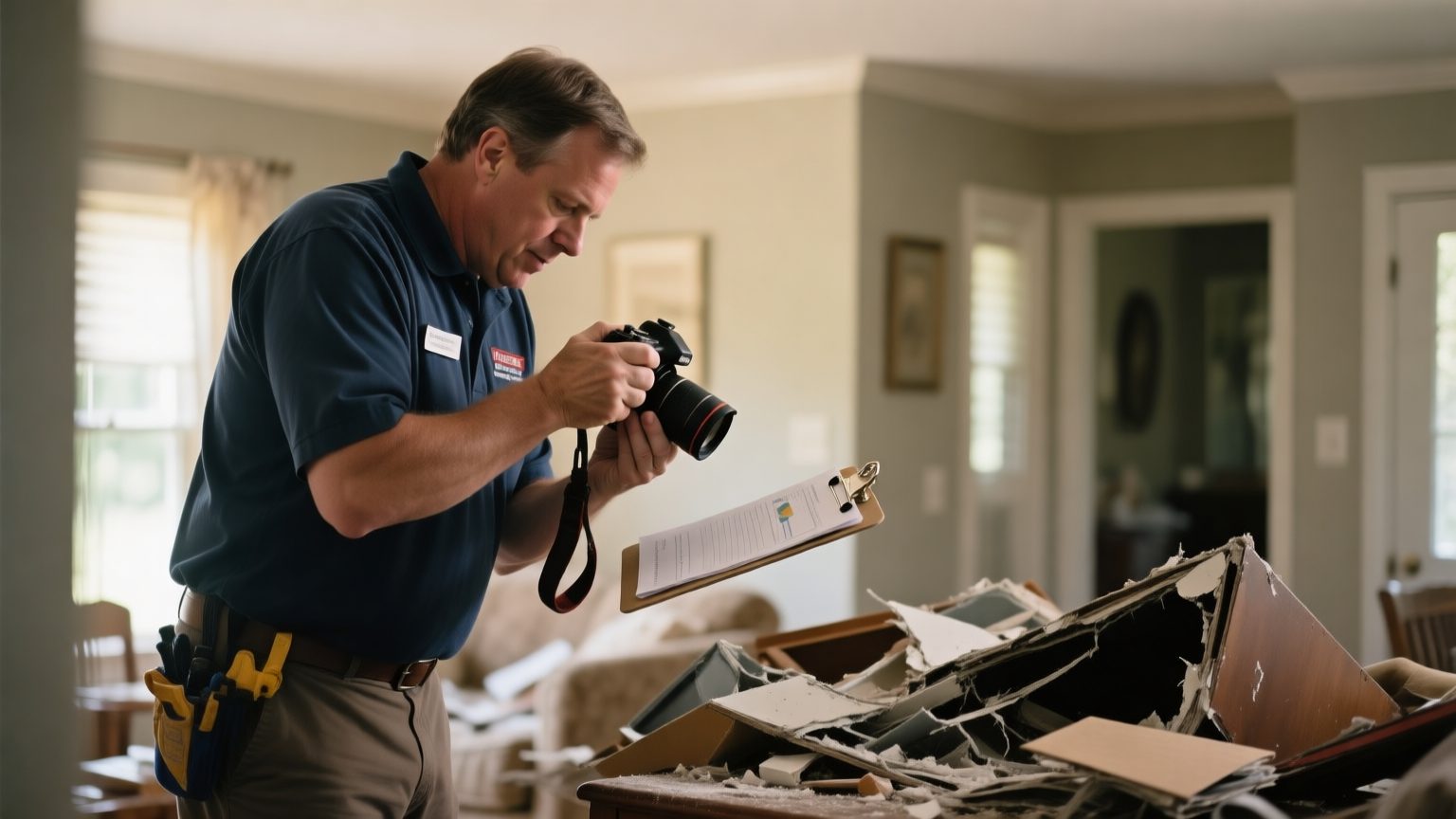
Most contents pushback is not a dispute about whether an item existed. It is a reviewer unable to verify a number. A carrier reviewer looking at a contents schedule is doing one job on each line: deciding whether the replacement cost value is supportable. When the line gives them nothing to check, they flag it, and the claim stalls in back and forth. The good news for a public adjuster or restoration contents team is that the reasons for pushback are predictable, which means they are preventable at the point you build the file, not after the reviewer objects.
This is a walkthrough of why contents line items get questioned in carrier review and how to build each line so the question never comes up. None of it is about arguing harder. It is about handing the reviewer a value they can accept on sight.
What a carrier reviewer is actually checking on each line
Before you can preempt pushback, it helps to see the line the way the reviewer does. For each item, they are asking a short list of questions: Is this item described specifically enough to know what it is? Does the replacement cost value have a source I can look at? Is that price in a reasonable range for this kind of item? And is the item consistent with the loss and the rest of the file? A line that answers all four moves. A line that leaves any of them open invites a request for more information.
This is why what replacement cost value (RCV) means matters at the line level and not just as a total. RCV is item by item: the price to replace that specific item new, at today's prices, before depreciation. A reviewer is not evaluating your claim in the aggregate; they are evaluating hundreds of individual values, and each one has to stand on its own evidence. The general expectations carriers set for a documented homeowners claim are described in the Insurance Information Institute's guidance on how to file a homeowners claim.
The four reasons contents line items get flagged
Almost every contents pushback traces back to one of four gaps. Each has a clean fix.
| Why it gets flagged | What the reviewer sees | How to preempt it |
|---|---|---|
| No visible price source | A dollar figure with nothing behind it | Attach a retailer product match, source, and date to the value |
| Vague item description | "Lamp" or "shoes" with no brand, model, or detail | Identify make, model, size, and quantity as specifically as possible |
| Price outside expected range | A value that looks high or low for the item type | Use a current market price from a reputable retailer, and show it |
| Inconsistent with the loss or file | An item that does not fit the room, loss type, or rest of the schedule | Tie the item to the affected area and keep methodology consistent across the file |
The pattern across all four is the same: pushback happens when the reviewer cannot verify the line from what you gave them. A price with no source is the fastest of these to trigger a flag, because a standardized reviewer instinctively distrusts a number they cannot trace. Attaching evidence to every line is the single highest-leverage habit in contents documentation, and the mechanics of doing it at volume are covered in how to attach retailer pricing evidence to every contents line item.
Preempt gap one: identify the item specifically
A reviewer cannot verify a price for an item they cannot picture. "Office chair" could be a $40 item or a $1,200 item, and a value attached to a vague description looks arbitrary no matter how careful your research was. The fix is specificity: brand, model or line, size, material, and quantity, captured at the point of documentation. The more precisely the item is named, the more defensible the value, because a specific item maps to a specific product a reviewer can find.
Specificity matters most on the items that carry the most value and the most scrutiny. A kitchen of small appliances is low-risk; a few high-end or designer pieces can move the claim and draw the closest look. Getting those right is a discipline of its own, covered in how to value high-end or designer contents items so the RCV holds up in review. On a fire or smoke loss, where items may be gone entirely, specificity comes from the pre-loss evidence you can reconstruct, which is the focus of how to document contents after a fire.
Preempt gap two: show where the price came from
The most common single cause of contents pushback is a value with no source. A carrier reviewer works against standardized pricing expectations, so a number they cannot trace is a number they will question. The preempt is to attach the source to the value itself: the specific retailer, a matching product, and the date the price was captured, so the reviewer can see the value is a real market price rather than an estimate. A number with a source, a matching product, and a clear description is easy to review and accept; the same number alone is easy to question.
This is where ContentsIQ does its work. It researches replacement cost values from real retailer data and attaches the evidence, top matches and the source context, to each line, then routes everything through a professional review queue so your team confirms and signs off before anything is final. AI drafts the values and the evidence; professionals review them. It assists with identification, valuation, and documentation, and it is complementary to the estimating platforms like Xactimate that carry the rest of the claim. It does not replace professional judgment, and it is not a public adjuster.
Preempt gap three: keep depreciation and condition clear
Contents values live inside the RCV and ACV framework, and pushback often comes from that step being unclear rather than the replacement price being wrong. Replacement cost value is the new price; actual cash value (ACV) is RCV minus depreciation for age, wear, and condition. Many policies pay ACV first and release the remaining recoverable depreciation after the item is replaced and proof is submitted. When a reviewer cannot see how condition and age were treated, the depreciation looks arbitrary, and that is its own form of pushback.
Preempt it by recording the inputs the depreciation step needs, age, condition, and quantity, alongside each item, so the ACV is traceable back to stated facts rather than a blanket percentage. How and when RCV and recoverable depreciation are actually paid depends on the specific policy, so the honest and accurate framing in your documentation is that the policy language governs. A clean home inventory, built the way the Insurance Information Institute describes in its guide to creating a home inventory, gives the condition and detail that make depreciation defensible rather than guessed.
Preempt gap four: consistency across the whole file
A single line can be perfect and still draw pushback if it is inconsistent with the rest of the file. Reviewers notice when methodology changes from item to item, when a value does not fit the affected area, or when similar items are priced differently for no visible reason. Consistency is a documentation property, not a per-item one: the same identification standard, the same sourcing approach, and the same condition treatment applied across every line. On a large claim handled by more than one person, consistency is where files quietly break down, which is why standardizing the approach across a team matters as much as any single value.
Build the file for the reviewer, not against them
The mindset that prevents pushback is to build the contents file as though the reviewer is on your side and simply needs to be able to verify what you did. Specific items, sourced values, clear condition, consistent method: a file built that way answers the reviewer's four questions before they ask, which is what keeps a contents claim moving instead of cycling through requests for more information. It is also what makes the record homeowner-ready and audit-ready in the neutral sense of being complete and traceable. You can browse more field guidance on the ContentsIQ blog, review how the platform handles your claim data on the security page, or talk to ContentsIQ about high-volume contents documentation.