What restorable and non-restorable actually mean
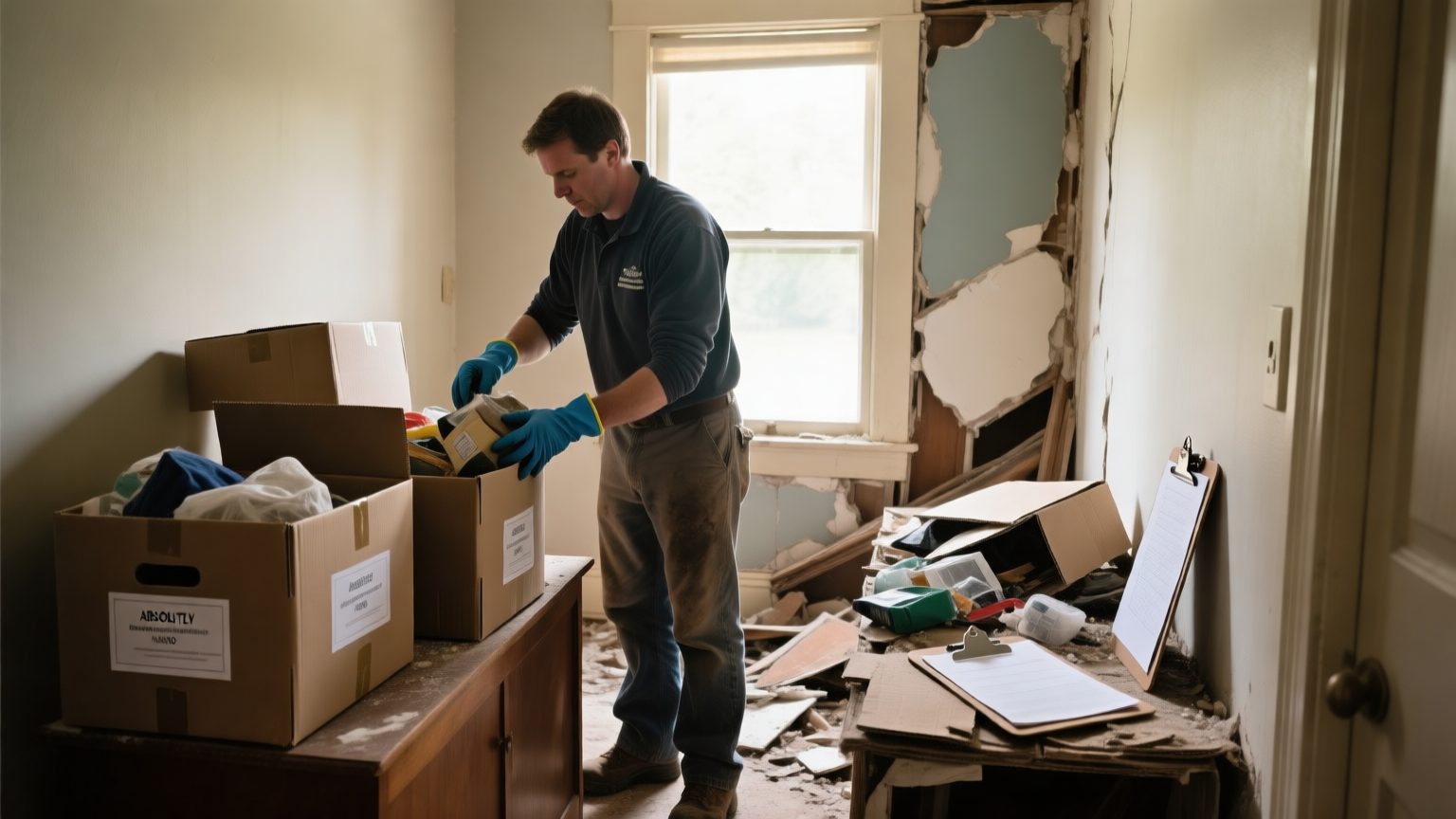
After a fire, water, or smoke loss, a restoration team sorts personal property into two groups. Restorable items can be cleaned, deodorized, and returned to pre-loss condition through professional restoration. Non-restorable items cannot be brought back safely or economically, so they are treated as a total loss and replaced. The non-restorable group becomes a list, sometimes called a total-loss or non-salvageable inventory, and that list is what gets valued on the contents claim.
The line between the two is not a guess. Restoration professionals work to industry benchmarks, and insurers and adjusters use those same benchmarks to check the scope. The IICRC standards that guide professional cleaning and restoration are the common reference point. The decision comes down to a repeatable set of factors.
The four factors that decide the list
Every item is assessed against the same questions. Most items answer clearly; the close calls are where documentation matters most.
| Factor | Points toward restorable | Points toward non-restorable |
|---|---|---|
| Type and severity of damage | Surface soot, light residue, minor water exposure | Direct flame or char, full saturation, warping or structural deformation |
| Material | Non-porous: glass, metal, hard plastic, sealed ceramic | Porous: upholstery, mattresses, particleboard, many textiles |
| Contamination level | Clean-water (Category 1) exposure, light smoke | Category 3 water, sewage, heavy smoke or biological contamination |
| Restore cost vs replace cost | Cleaning costs a fraction of replacement | Restoration approaches or exceeds the replacement cost |
Damage type and material: the physical test
The first two factors are about the item itself. An item that took direct flame, melted, warped, or was fully submerged is usually non-restorable on sight. Beyond those clear cases, the material decides a lot. Non-porous surfaces such as glass, metal, and hard plastics can typically be cleaned and deodorized. Porous items absorb smoke, soot, and water into their structure, which makes full decontamination difficult and sometimes impossible.
This is why a soot-covered glass vase and a soot-covered upholstered chair can end up on different sides of the list even after the same fire. The vase wipes clean. The chair holds odor and residue in its foam and fabric. The same logic separates items after a water loss, where the room-by-room method in the guide to documenting contents after a water loss helps capture condition before anything is moved.
Contamination: the health and safety line
Water losses are graded by how clean the water is. Category 1 is clean water from a supply line. Category 2 is gray water with some contaminants. Category 3 is black water, which includes sewage and floodwater and carries health risks. As the category rises, more items move to non-restorable, and porous items exposed to Category 3 water are generally discarded on public health grounds rather than cleaned.
The same principle applies to mold and heavy biological contamination. Federal guidance on mold cleanup in the home notes that porous or absorbent materials that become moldy may have to be thrown away, because mold can grow into the material and resist cleaning. Safety, not just cost, can be what puts an item on the non-restorable list.
The economics: restore cost vs replacement cost
Even when an item can technically be restored, there is a second question: should it be? Restoration has a cost, and if cleaning and deodorizing an item approaches or exceeds what it would cost to replace it new, the item is usually treated as non-restorable. This is the restore-versus-replace threshold, and it is where the restoration scope and the contents valuation meet.
Getting this right in both directions protects everyone. Restoring items that should have been replaced wastes money and time. Replacing items that could have been cleaned inflates the claim and invites pushback. A defensible non-restorable list shows why each item is on it, which is the same discipline behind building a defensible contents inventory. The Insurance Information Institute's overview of settling claims after a disaster reinforces that clear documentation is what keeps this part of the claim moving.
How the non-restorable list becomes the claim
Once the list is set, each non-restorable item needs a value. That is where the contents claim really begins: identifying each item specifically, finding a current price, and recording the source. Understanding what replacement cost value (RCV) means for each item is the foundation, and the same photos used to sort restorable from non-restorable can feed the valuation step. The method used to capture and organize items after a fire, described in the guide to documenting contents after a fire, produces the record that supports both the sorting decision and the value.
How ContentsIQ helps
ContentsIQ takes the photos of non-restorable items and turns them into structured item descriptions with replacement cost values and the retailer evidence behind them. It drafts the valued inventory in a fraction of the manual time, then routes it through a review queue so your team confirms each call before it is final. Claim files are handled carefully, and you can read how ContentsIQ handles security for the specifics. More guides on documenting and valuing contents are on the ContentsIQ blog. ContentsIQ supports identification, valuation, and documentation. It does not decide restorability, replace professional judgment, or provide legal or insurance advice.