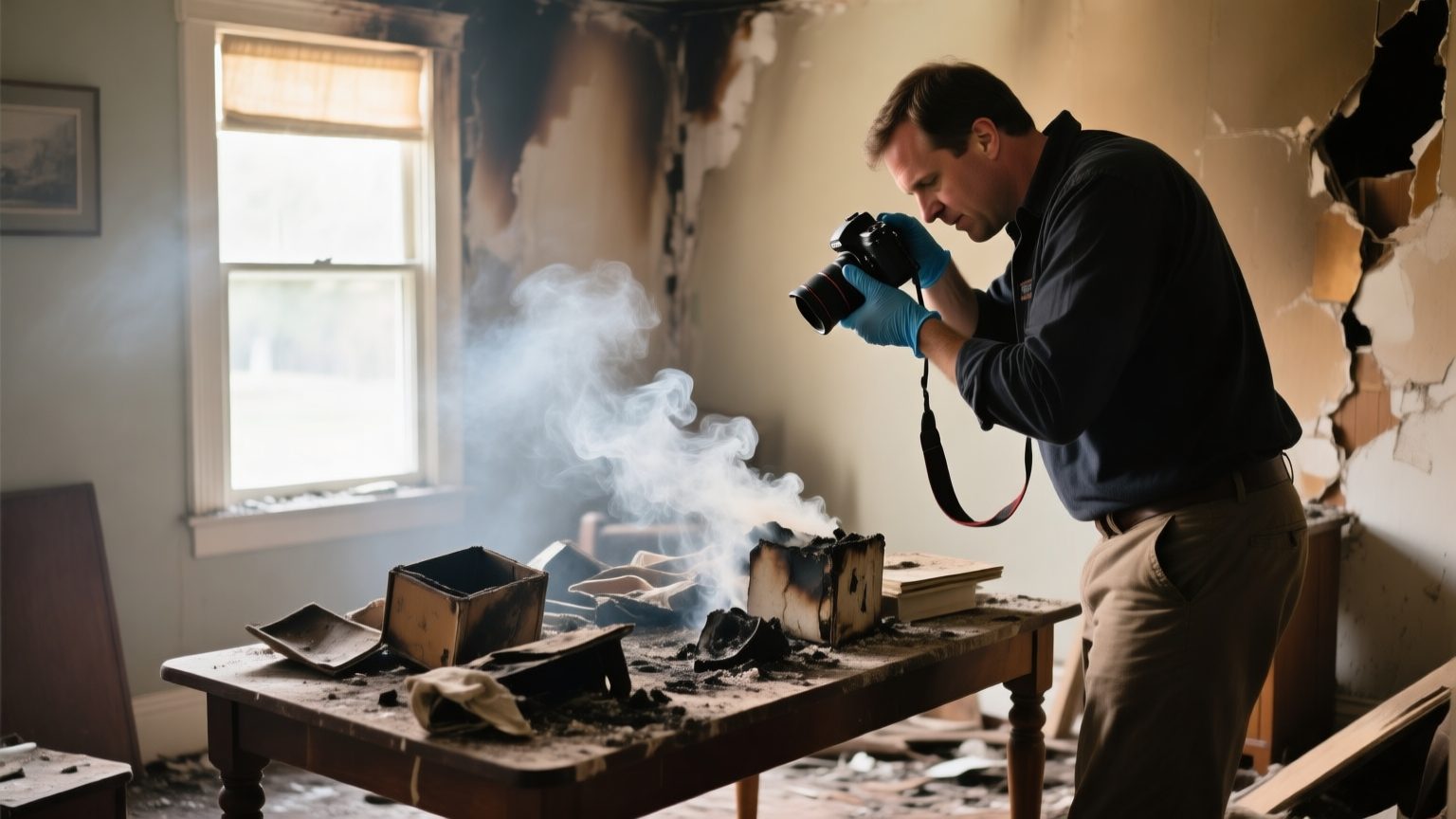
Why smoke claims are harder to value than they look
A smoke or soot loss is deceptive. Unlike a total-loss fire where most contents are visibly gone, a smoke event leaves a room full of items that still look usable. Some genuinely are once cleaned. Others carry odor, soot residue, or internal contamination that shortens their life or makes them unsafe, even though they photograph fine. That gap between how an item looks and what actually happened to it is where smoke-damage contents claims stall.
The result is that a smoke inventory is not a single decision but two questions asked of every item: can it be restored, and if not, what does it cost to replace with like kind and quality. Getting the second answer wrong, or recording it without evidence, is a common reason a contents file bounces back in review.
Cleanable or a loss: a determination, not a guess
Whether a smoke-affected item can be cleaned back to a safe, usable condition is a professional restoration judgment, not something to assume across the board. Different materials behave differently under smoke exposure, and industry restoration practice, reflected in the IICRC restoration standards, treats fire and smoke remediation as an item-and-material-specific process rather than a uniform one.
| Item type | Typical smoke behavior | Documentation focus |
|---|---|---|
| Upholstered furniture, mattresses | Absorb odor and particles deep into padding | Odor persistence, soot penetration, cleaning attempted |
| Clothing, linens, soft goods | Often cleanable, but heavy soot or synthetics may not fully recover | Fabric type, soot level, whether laundering restored it |
| Electronics | Residue can corrode components; may fail later even if it powers on | Interior residue, function notes, manufacturer guidance |
| Books, paper, artwork | Porous, hold odor, staining hard to reverse | Staining, odor, restorability assessment |
| Sealed / hard-surface goods | Frequently cleanable | Surface residue, cleaning outcome |
The point of the table is not to pre-decide any item. It is to show why a blanket "contents can be cleaned" note does not hold up: an upholstered sofa, a laptop, and a stack of sealed dinnerware exposed to the same smoke are three different determinations. The valuation and documentation job is to capture each determination clearly and, where an item is treated as a loss, build the value that supports it.
What review-ready smoke-loss documentation contains
For every item recorded as non-restorable, the file needs more than a line and a number. Deciding an item is a loss is its own step, and the practice of a defensible non-restorable contents determination is what separates a value a reviewer accepts from one they question. A review-ready smoke-loss item record generally includes:
- A specific item description: brand, model, and identifying detail where the photo or claim file shows it.
- The condition and the reason it is treated as a loss: odor, soot penetration, internal residue, or a failed cleaning attempt.
- A replacement cost value for a like-kind-and-quality item at current prices.
- The source of that price, a comparable current retail listing, so the value can be checked.
- Age and condition notes to support the depreciation step your policy applies.
That evidence trail is what makes a smoke value hold up. The reasoning behind it is the same standard covered in RCV evidence that survives carrier review: a number alone invites a question, while a number with a matching product, a source, and a clear description is easy to review and accept. Neutral consumer guidance from the Insurance Information Institute on settling insurance claims after a disaster makes the same practical point from the policyholder side: a detailed, well-documented inventory is what keeps a claim moving.
Where the volume problem hits
Smoke events are rarely small. A single home can hold well over a thousand items, and a partial smoke loss can leave nearly all of them needing an individual determination and, for the losses, an individually researched value. Doing that by hand, item by item, is the 3-to-5-day-per-claim bottleneck many contents teams describe, and it is the same volume challenge that shows up on any total-loss fire contents valuation. Catastrophe and wildfire smoke events multiply the problem, because a single adjuster or contents team may be carrying dozens of these files at once, each one a full home of items waiting on the same manual research.
This is the work ContentsIQ is built to speed up on the valuation and documentation side. It reads photos, item lists, and claim files, drafts specific item descriptions, researches replacement cost values from real retailer data, and attaches the source evidence to each item, then routes everything to a professional review queue. AI drafts, professionals review. The restoration determination of what cleans and what does not stays with the professionals and the restoration workflow; ContentsIQ documents those outcomes and builds the defensible values, which is why it complements packout and restoration operations tools rather than replacing them.
What ContentsIQ does not do here
ContentsIQ does not decide whether an item is restorable, does not clean or handle physical contents, and does not promise a particular claim outcome. Your policy language governs what is covered and how replacement cost is paid. What ContentsIQ provides is faster, more consistent, evidence-backed documentation and valuation so a professional can review a complete smoke-loss file instead of building each item from scratch. This is informational, not legal or insurance advice.